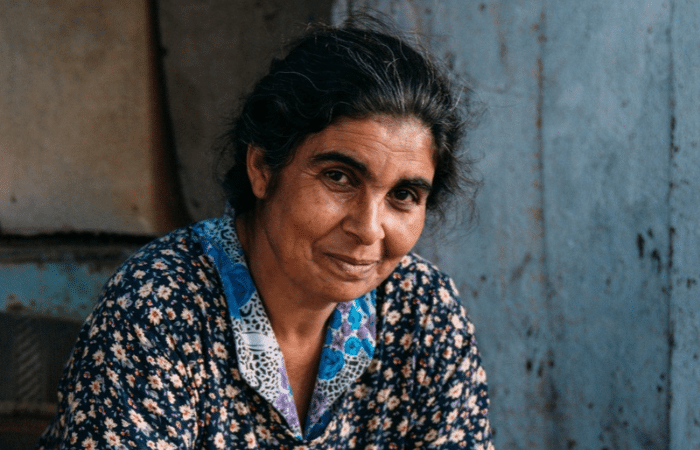


Finding a home amid war: “A Home for Rita” and the struggle of Ukraine’s Roma communities at the 2026 Samizdat Film Festival13 min read
In her documentary A Home for Rita, Ukrainian filmmaker Yulia Appen follows a displaced Roma family struggling to rebuild their lives after Russia’s full-scale invasion of Ukraine. Speaking to Lossi 36, the director reflects on the discrimination faced by Roma communities, the meaning of home, and why documenting suffering sometimes means becoming directly involved in the lives of those being filmed.
When Russia launched its full-scale invasion of Ukraine in February 2022, millions of Ukrainians were forced to abandon their homes, leaving behind not only their possessions but also their communities, livelihoods and sense of security. For Ukraine’s Roma population, already facing longstanding discrimination and social exclusion, the war compounded vulnerabilities that had existed long before Russian troops crossed the border.
In A Home for Rita, Ukrainian filmmaker Yulia Appen approaches these overlapping crises through the experiences of Rita, a Roma mother of nine, and her extended family. Displaced from Russian-occupied territory in the Zaporizhzhia region, they struggle to find stable accommodation, access essential services and create a secure environment for their children. Yet the documentary is more than a portrait of a family uprooted by war. It is also an exploration of solidarity, belonging and the responsibilities that arise when a filmmaker becomes intimately involved in the lives of her subjects. Rather than maintaining the distance traditionally associated with documentary observation, Appen gradually becomes an active participant in the family’s efforts to rebuild their lives.
Screened at the 2026 Samizdat Eastern European Film Festival, A Home for Rita raises questions that extend beyond Ukraine’s wartime experience. What does it mean to have a home when one’s life has been repeatedly uprooted? How do already marginalised communities navigate the additional obstacles created by displacement? And what responsibilities do filmmakers have towards the people whose stories they choose to tell? In an interview with Lossi 36, Appen discusses the origins of her documentary, her relationship with Rita and her family, and the experiences that transformed what initially began as an effort to document the Russian occupation into a deeply personal project centred on practical assistance and solidarity.
From documenting occupation to helping a family
Appen’s involvement with Rita began through humanitarian work rather than a conventional film project. In late 2022, she joined Freefilmers, an independent filmmaking collective originating from Mariupol and Zaporizhzhia. Following Russia’s full-scale invasion, some of its eight members joined the Ukrainian Armed Forces, while others concentrated on providing assistance to people affected by the occupation.
During humanitarian work in Zaporizhzhia, the collective met Oleksii, the head of Lacho Drom, a Roma centre supporting internally displaced people. He explained that numerous Roma families who had fled Russian-controlled territories were seeking assistance from the organisation. At the time, nearly two-thirds of Zaporizhzhia region was under Russian occupation, and many of those arriving had disturbing accounts of life under Russian control, including testimonies of abuses committed by occupying forces. Oleksii feared that these stories would never be properly recorded and would eventually disappear from collective memory, recalling the historical neglect of crimes committed against Roma during the Second World War. Together, they decided to record a series of interviews with displaced Roma, which eventually formed the basis of a short film. It was during this work that Appen first met Rita.
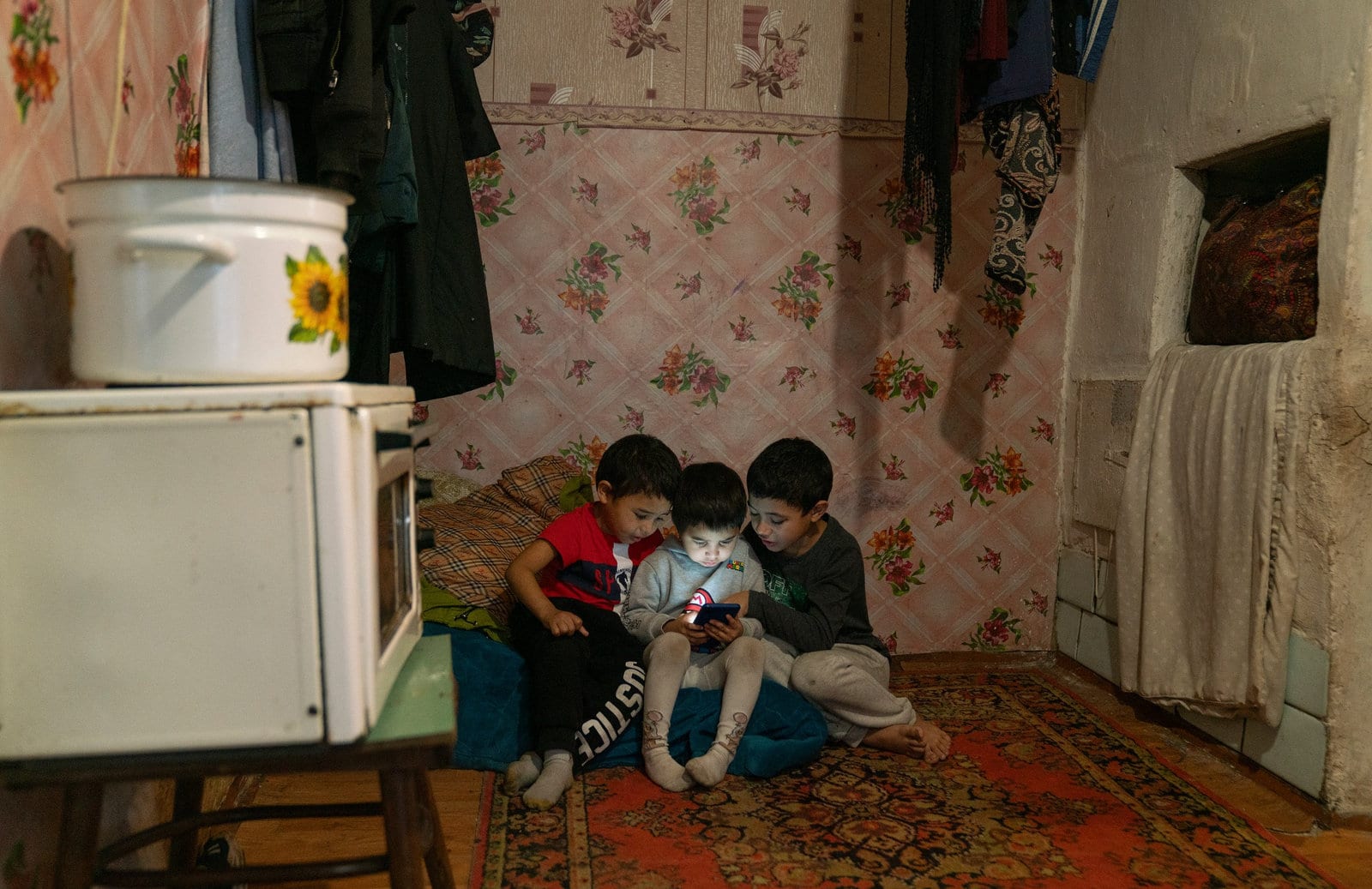
Initially, the filmmaker visited the accommodation where Rita and her family were staying to conduct interviews. However, it quickly became apparent that their immediate needs were far more pressing than the documentary project itself. Rita had nine children, several of whom had large families of their own, and they were living in extremely difficult circumstances, without gas, electricity or reliable access to water.
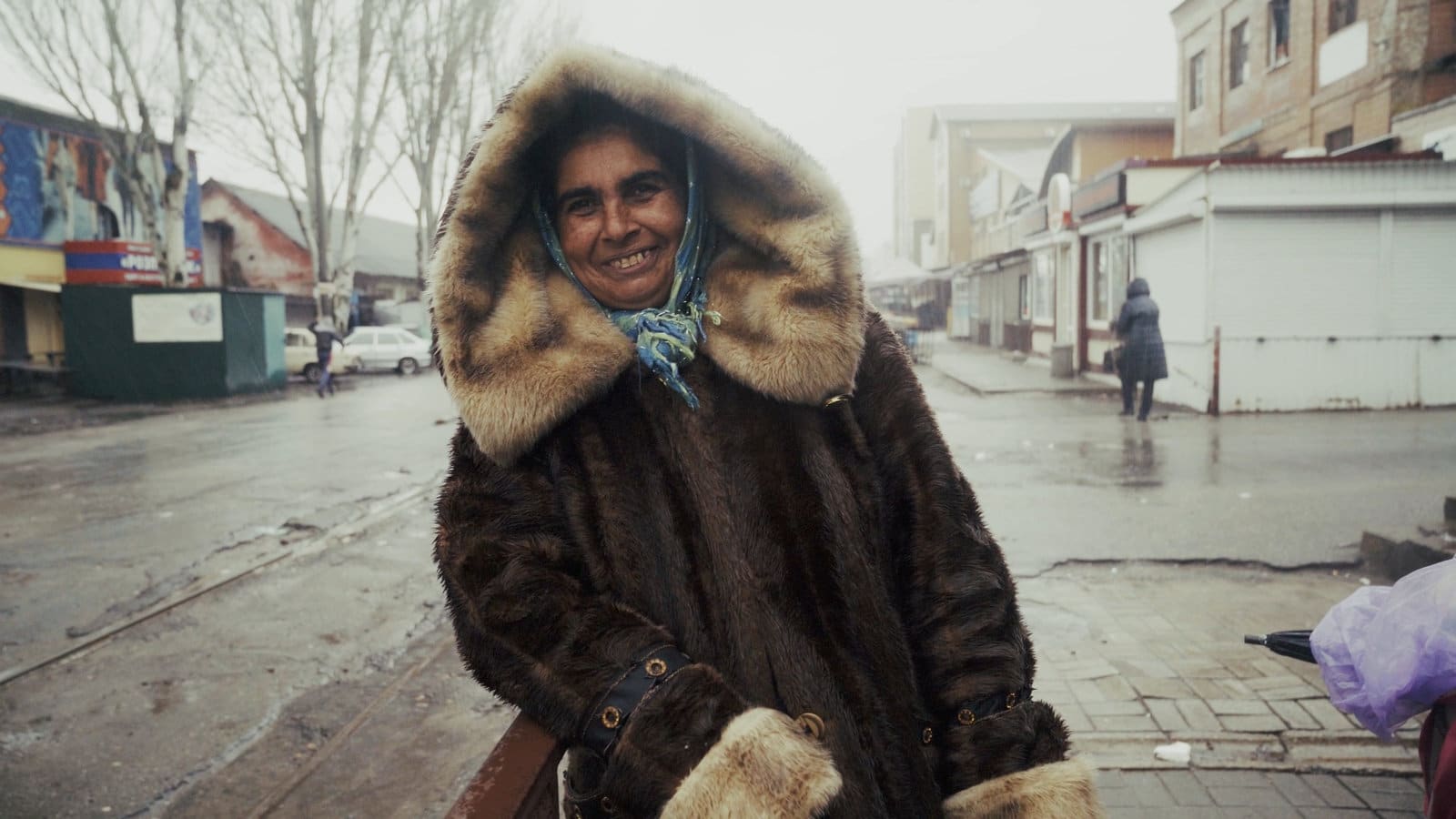
Conversations that had originally been intended to document their experiences of occupation increasingly revolved around finding practical solutions to their living conditions. Appen began returning with household appliances, including a washing machine and an electric cooker, as well as baby formula and other essential supplies. During these visits, they would drink coffee together and spend hours talking. What had started as an interview gradually developed into a close relationship. “I was deeply struck by her story, her colourful and mystical way of thinking, and the optimism and humour with which she navigates the most difficult moments of life,” Appen recalls.
She realised that she wanted to continue filming Rita, not simply because of the difficulties her family faced, but because of the remarkable personality she had come to know. Over the following three years, Freefilmers continued supporting Rita’s family, while Appen filmed their encounters whenever the opportunity arose. This accumulated footage eventually became the foundation of A Home for Rita.
The meaning of home
The notion of home occupies a central place in Appen’s documentary, although for Rita and her family it is less an abstract question of identity than a matter of everyday survival. “The safety of the children always comes first,” Appen explains. Beyond that, having a home means enjoying the basic conditions necessary for children to study, develop and grow up happily. Appen herself has a complicated relationship with belonging. Born in Zaporizhzhia, she spent many years in Kyiv before returning to her hometown after Russia’s full-scale invasion, believing that the frontline city urgently needed assistance. Having lived between two cities for years, she admits that she does not have a place she can unequivocally call home. Nevertheless, working with Rita forced her to confront the considerable differences between their circumstances. “I have an education, skills, and the ability to work and earn a living. My position is much more secure,” she explains. Rita, by contrast, married at thirteen and received only a basic education. Throughout her life, she relied largely on seasonal work, including harvesting vegetables, collecting nuts and selling feathers and clay. Without financial resources, educational opportunities or stable employment, planning for the future becomes exceptionally difficult. Appen was acutely aware of this inequality throughout the filmmaking process, recognising that her own circumstances gave her opportunities that Rita had never enjoyed. “Rita did not have the opportunity to tell her own story, so, given the privileges I have, it was important for me to bring her story to a wider audience.”
Although Rita’s experience is deeply personal, it also reveals broader inequalities affecting Roma communities in Ukraine. The country’s Roma population is far from homogeneous, encompassing communities with distinct histories, cultural traditions and linguistic backgrounds shaped by centuries of settlement and migration across Eastern Europe. Appen is careful not to present herself as an authority on all Ukrainian Roma communities, stressing that her experience relates primarily to those living in the Zaporizhzhia region.
Even within Rita’s family, important differences exist. Rita comes from a Hungarian Roma background, while her husband, Kolya, is a Crimean Roma. Their linguistic backgrounds differ, and Rita eventually adopted the variety spoken by her husband. The filmmaker also encountered the consequences of restricted educational opportunities, particularly for women. In the families she worked with, early marriage, limited schooling and difficulties with literacy could create significant obstacles when dealing with public institutions. Some people lacked passports or even birth certificates for their children, creating major difficulties in accessing public services.
During wartime, these problems have become particularly consequential, as identity documents, property records and other administrative paperwork can determine whether displaced families receive government assistance, compensation for destroyed homes or permission to travel abroad.
Housing represents another major difficulty. Appen explains that some Roma families purchase houses without formally registering ownership, leaving them particularly vulnerable when those properties are destroyed by shelling or fall under Russian occupation. Without the appropriate legal documentation, claiming compensation or proving ownership can become nearly impossible.
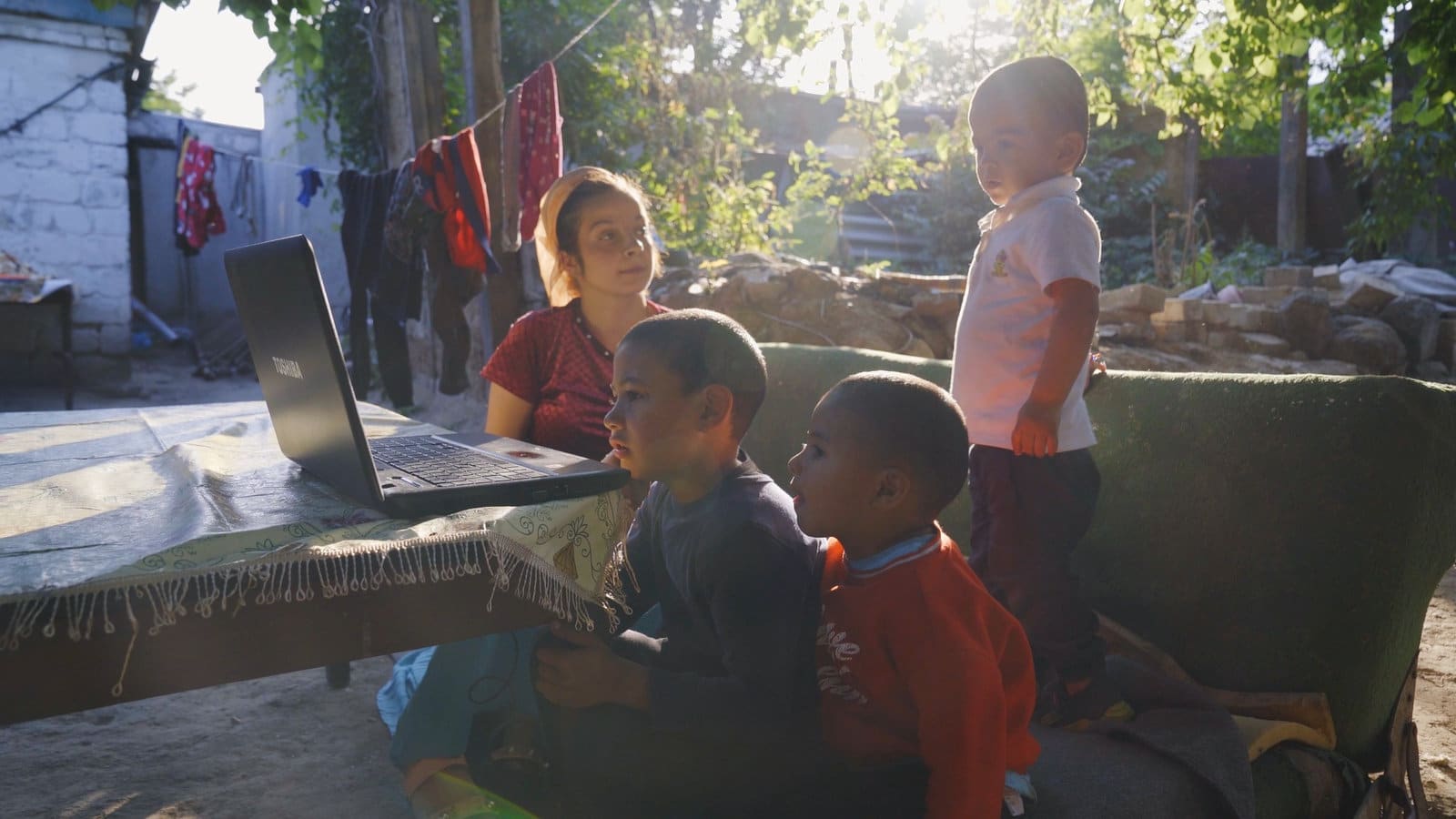
The transition to online schooling following the full-scale invasion also created new barriers for children whose families lacked smartphones, tablets or reliable internet access. Freefilmers tried to address these problems by finding devices and helping children participate in remote classes. Access to healthcare presented similar challenges. According to Appen, experiences of stigma and discrimination sometimes made visits to doctors or public institutions deeply distressing, leading some families to avoid seeking professional care and rely instead on self-medication.
The collective’s work therefore extended well beyond material assistance. “We helped establish communication with public institutions and doctors, installed the necessary applications on phones, and supported women during appointments,” she explains. These seemingly ordinary interventions illustrate how exclusion operates in practice, with a missing document, an inaccessible online service or a hostile encounter with an official potentially producing consequences far beyond the immediate inconvenience. For families already affected by displacement and poverty, overcoming such barriers often requires sustained support rather than isolated acts of charity.
When filmmaking becomes an act of solidarity
One of the most distinctive aspects of A Home for Rita is the relationship between the filmmaker and her subjects, which gradually blurs the conventional boundaries between documentary observation and active participation. Documentary filmmakers frequently confront ethical questions about representation: how much of another person’s private life should be made public, who ultimately benefits from telling their story, and whether the camera risks reducing complex human experiences to images of suffering.
For Appen, Russia’s full-scale invasion fundamentally altered her understanding of filmmaking. “After the full-scale invasion, my attitude towards filmmaking changed radically. I stopped seeing cinema exclusively as an artistic act,” she explains. Her priority became making a film that could draw attention to Rita’s circumstances and mobilise tangible support for her family and other displaced Roma households. Rather than approaching humanitarian assistance as something separate from her artistic practice, Appen increasingly saw the two as inseparable. The documentary became both a means of recording the family’s experiences and an opportunity to help improve their living conditions.
That ambition eventually produced a remarkable outcome. With humanitarian support from the Ukrainian Feminist Network, Freefilmers was able to purchase a house for Rita and her family in Piatykhatky, away from frontline Zaporizhzhia. For a family that had experienced displacement, precarious accommodation and constant insecurity, the purchase represented considerably more than a change of address. It offered the possibility of stability and a degree of control over their future, particularly for the children whose safety had always been Rita’s foremost concern.
Appen describes the house as a place where the family could finally begin to feel differently about their circumstances and rebuild their lives. Yet this achievement did not mean that the documentary had fulfilled its purpose or that the family’s difficulties had disappeared. Rather, it demonstrated how filmmaking, when accompanied by sustained relationships and practical engagement, could contribute to concrete changes in people’s lives. In this sense, the title A Home for Rita refers not only to the family’s search for shelter, but also to the collective effort through which that shelter eventually became possible.
The experience also shaped Appen’s approach to editing and the ethical choices involved in determining what audiences should see. Over three years of filming and spending time with Rita’s family, she accumulated far more material than could ever appear in the finished documentary. She estimates that only around ten percent of their shared experiences were filmed, and that just ten percent of the recorded footage made it into the final cut. Throughout the editing process, she repeatedly questioned the boundaries between intimacy and public representation. “Would Rita or Fatima want our very personal conversations to go beyond the two of us? And how would others perceive them?” she remembers asking herself. Appen insists that she never wanted to idealise Rita or construct an artificially flattering portrait. Instead, she sought to represent their interactions as faithfully as possible while respecting the family’s dignity and privacy.
Her guiding principle was that doing something genuinely useful mattered more than capturing a visually striking scene. It is a perspective that challenges familiar assumptions about documentary filmmaking, suggesting that the ethical responsibility of a director may extend beyond the finished work and into the relationships developed during its creation.
Among the experiences that never made it into the documentary, one encounter has remained particularly vivid in Appen’s memory. It took place during the purchase and registration of the family’s new house, when Appen and Rita were spending the night in Piatykhatky, in a former bar that had been converted into a shelter. That evening, Rita decided to read tarot cards for the filmmaker. Appen knew little about tarot, but the cards that appeared seemed increasingly ominous: Death, the Hanged Man and other unsettling images. Rita drew one card after another before looking at Appen, gathering the supposedly bad cards into the deck and setting them aside. “Right, well, basically: you’re going to have a happy life, wonderful relationships and a good job,” she announced. Rather than delivering an alarming prediction, Rita had simply decided to reinterpret the reading to spare her friend any distress. “That’s exactly who she is,” Appen recalls. “So caring and full of life.”
The anecdote captures something essential about Rita’s personality that might otherwise be overshadowed by the circumstances of her displacement. It also reverses the familiar relationship between helper and recipient of assistance: Rita, whose family has depended on humanitarian support, is herself offering reassurance and care. In that moment, she was not simply the subject of a documentary about hardship, but a woman whose humour, generosity and imagination shape the lives of those around her.

A family’s search for safety continues
Although filming concluded at the end of 2025, the family’s story did not end with the purchase of a house. The security situation in Zaporizhzhia has continued to deteriorate, with Russian guided aerial bombs and first-person-view drones posing an increasingly serious threat to civilian life. Appen is particularly relieved that Fatima, one of Rita’s daughters, and her six children managed to leave the city. With assistance obtaining identity documents and passports, they were able to travel temporarily to Germany.
Rita is now staying with Fatima and helping care for the children, although she hopes eventually to return to Ukraine. Another daughter, Kristina, has given birth to her second child and moved to Finland with her partner, Ramesh. Meanwhile, Rita’s husband, Kolya, remains in the family’s house with another daughter, Valya, who has ten children. For Appen, knowing that they have found a measure of safety brings considerable relief, even as the war continues and the future remains uncertain.
Their experiences illustrate how displacement rarely follows a straightforward trajectory from danger to security. Families may find themselves separated across several countries, with some members able to leave and others remaining in Ukraine, each facing different practical and emotional challenges. A home can provide stability, but it cannot eliminate the uncertainties of war or guarantee that a family will remain together. What makes A Home for Rita particularly compelling is its refusal to separate the act of documenting suffering from the possibility of responding to it. Through Rita’s experiences, the documentary draws attention to the structural inequalities that Roma families face, while also showing the relationships and practical acts of solidarity through which some of those obstacles can be overcome. It avoids reducing its protagonists to passive victims of either discrimination or war, allowing their personalities, humour and relationships to emerge alongside the difficulties that define their everyday circumstances.
In a war that has produced countless images of destruction and displacement, Appen’s documentary offers a different perspective: a story in which the camera does not merely record the loss of a home, but accompanies the struggle to build another. Rita’s journey is neither a simple success story nor a reassuring account of hardship overcome. Her family remains scattered, the security situation in Ukraine continues to threaten their future, and many of the structural barriers facing Roma communities remain unresolved. Yet the film also demonstrates what can emerge from sustained human relationships and a willingness to act beyond the immediate demands of artistic production. Ultimately, A Home for Rita invites viewers to reconsider what it means to belong somewhere. A home is not simply a building or a place on a map, but the possibility of living with dignity, caring for one’s family and imagining a future beyond the next emergency.
A Home for Rita (2026), directed by Yulia Appen, was screened at the 2026 Samizdat Eastern European Film Festival. This article draws on an interview conducted in Ukrainian with the director by Lossi 36.