


The paradoxes of militarized Gen-Z fashion: Views from Kyiv10 min read
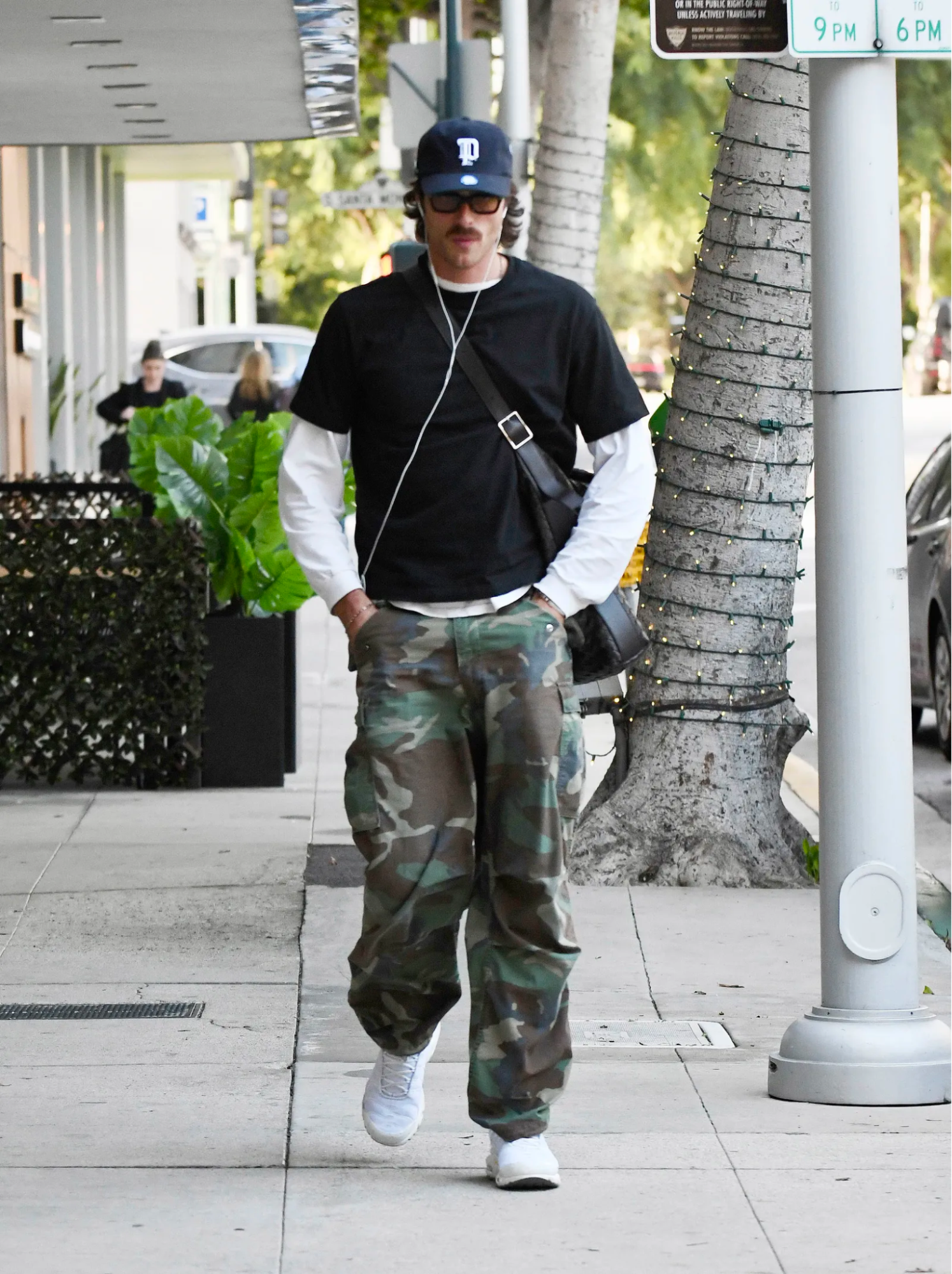
Outfits with khaki, brown, and olive tones. Prominent utility features, like practical shoes and heavily pocketed bags. The ubiquity of Stone Island apparel, with its NATO-like logo. This is the visual vocabulary of Kyiv, the capital city of a country facing a brutal invasion. But, it can also be found at a DJ set in Montreal, or of the rocky seaside of Marseille – spaces lacking air raid sirens or prominent support for the military. Yet, what these cities do have are Gen-Zers taking part in the revival of 2000s-era fashion.
Source: Who What Wear
Year 2000 (Y2K) fashion is worn predominantly by this generation, fuelled by a nostalgia for a time that was almost theirs. In case your social circles aren’t composed of 14-29 year olds, think wide legged pants juxtaposed with small shirts and adorned with experimental fabrics, colours, and accessories. It is maximalist and the silhouettes are imposing – and it also has a strangely militaristic expression.
While the aesthetics on the streets of Kyiv seem similar to Gen-Z’s camo and cargo revival, the connotations between the two groups could not be more opposite. One springs from a practical need and intention in the face of a military invasion, while the other promotes a deep militaristic ideology, especially in the United States. This militaristic ideology is rendered less abstract by the Silicon Valley elite who are actively partaking in this trend through their own style and business ventures.
Kyiv street style
The street style military aesthetics that have dominated Ukraine since Russia’s fullscale invasion are a direct nod to the military, which has become the new, unintentional, influencer of Kyiv fashion, as reported by Daria Mitiuk for The New York Times. Unlike in the United States, where donning military-style clothing in homage to the armed forces can signal attachment to an aggressive and militaristic outlook, in Ukraine this fashion is meant to symbolize the fight against imperial conquest. Moreover, for the wearers and designers alike, the style has become a sign of solidarity with the Ukrainian army. For instance, high-end Ukrainian fashion designer Anton Belinskiy pivoted in 2022 to making clothing for soldiers, such as thermals and balaclavas. The street style brand Riot Division, which sells fashionable technical clothing for Kyiv’s cultural scene, has had a strong ethos of supporting the military since 2015. However, while part of the aesthetic arguably comes from the left in Ukraine, it is not part of the traditional leftist subversion of the military look, where such clothing is worn ironically and against imperial pursuits.
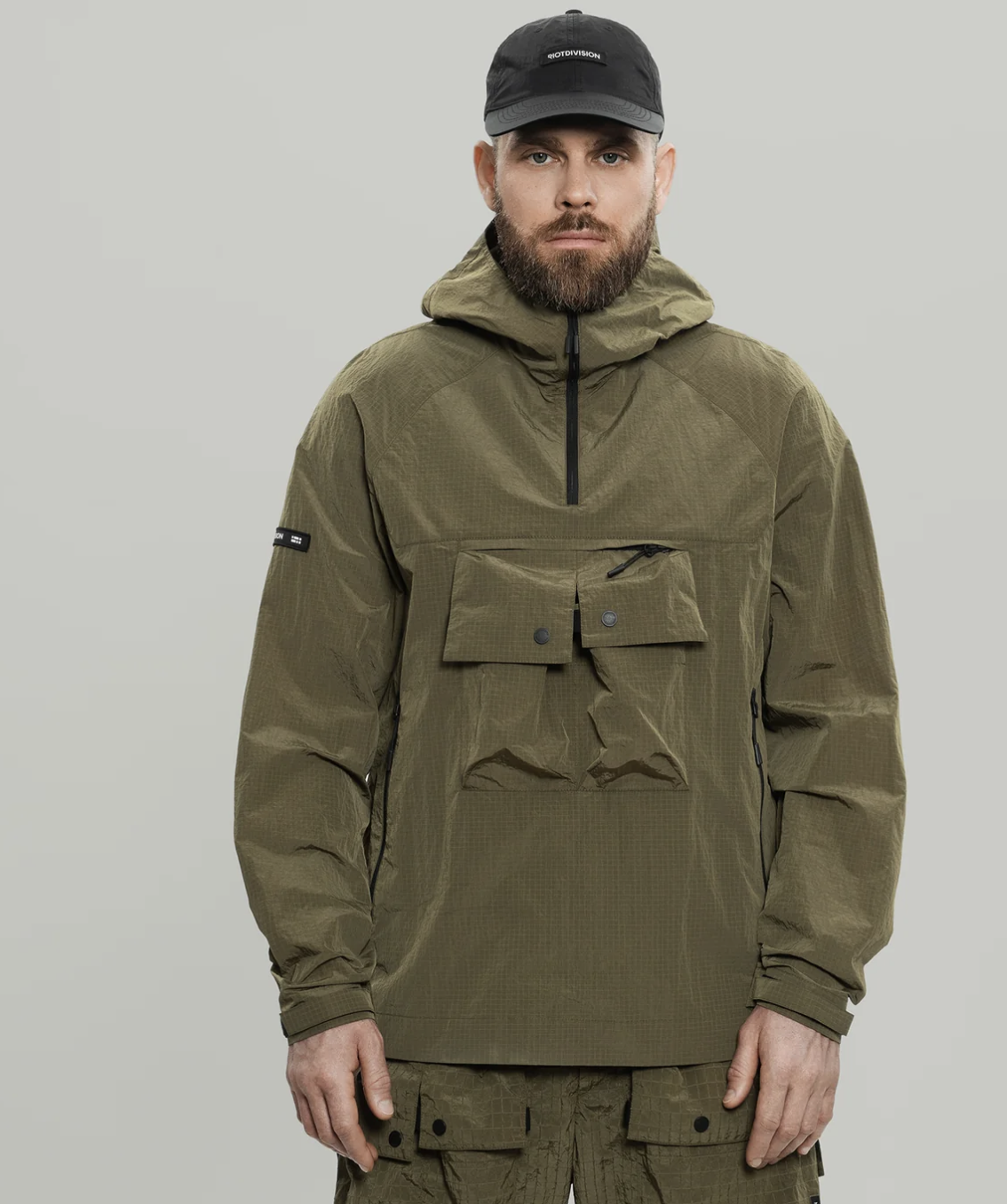
Image: Riot Division
The military look in Ukraine is steeped in meaning, and the decision to wear it is an active and conscious one. This is in part due to the weight of the symbolism. For example, wearing tactical and military-like apparel in Ukraine comes with a unique set of codes, such as not wearing the “pixel” camouflage that is exclusively reserved for the actual military. In fact, it is conscious and deliberate as it responds to the very real needs of living in a warzone, like quickly going to, and staying in, an underground shelter.
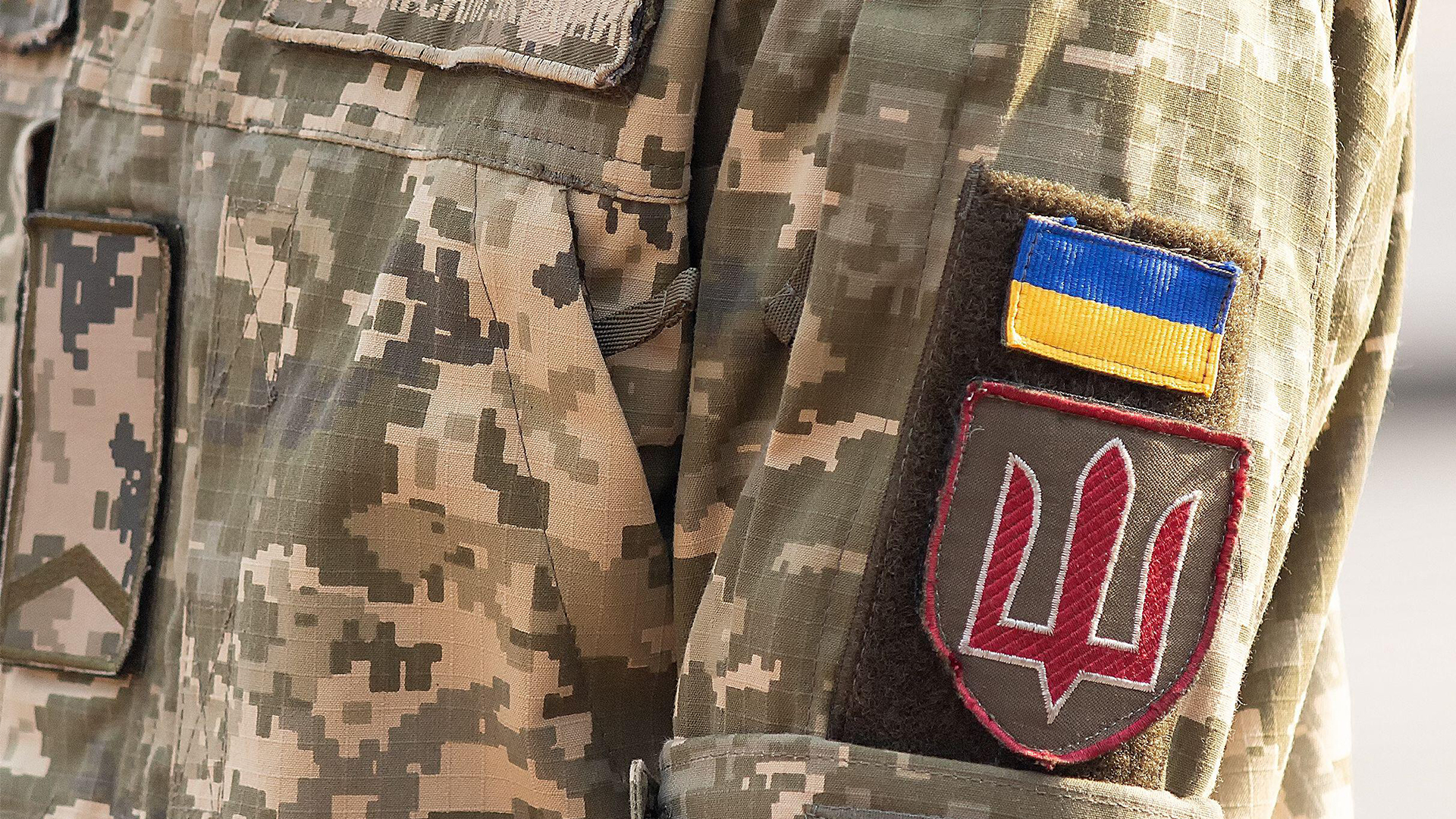
Image: Forces News
Whether worn as an homage or as gear, individual and intentional choices have moved Ukraine’s military aesthetic into the zeitgeist, revealing it to be far less top-down than one might imagine. It provides a wealth of salient and codified images and symbols for the wearer to choose from.
So, could Gen-Z outside Ukraine be wearing this style as a way to show solidarity? Not exactly.
Gen-Z’s Y2K revival
Elsewhere, the military look is more of a top-down trend and is propelled by a deeply militaristic ideology. Even when worn subversively, it still perpetuates the idea of waging war, as opposed to surviving another country’s war of choice.
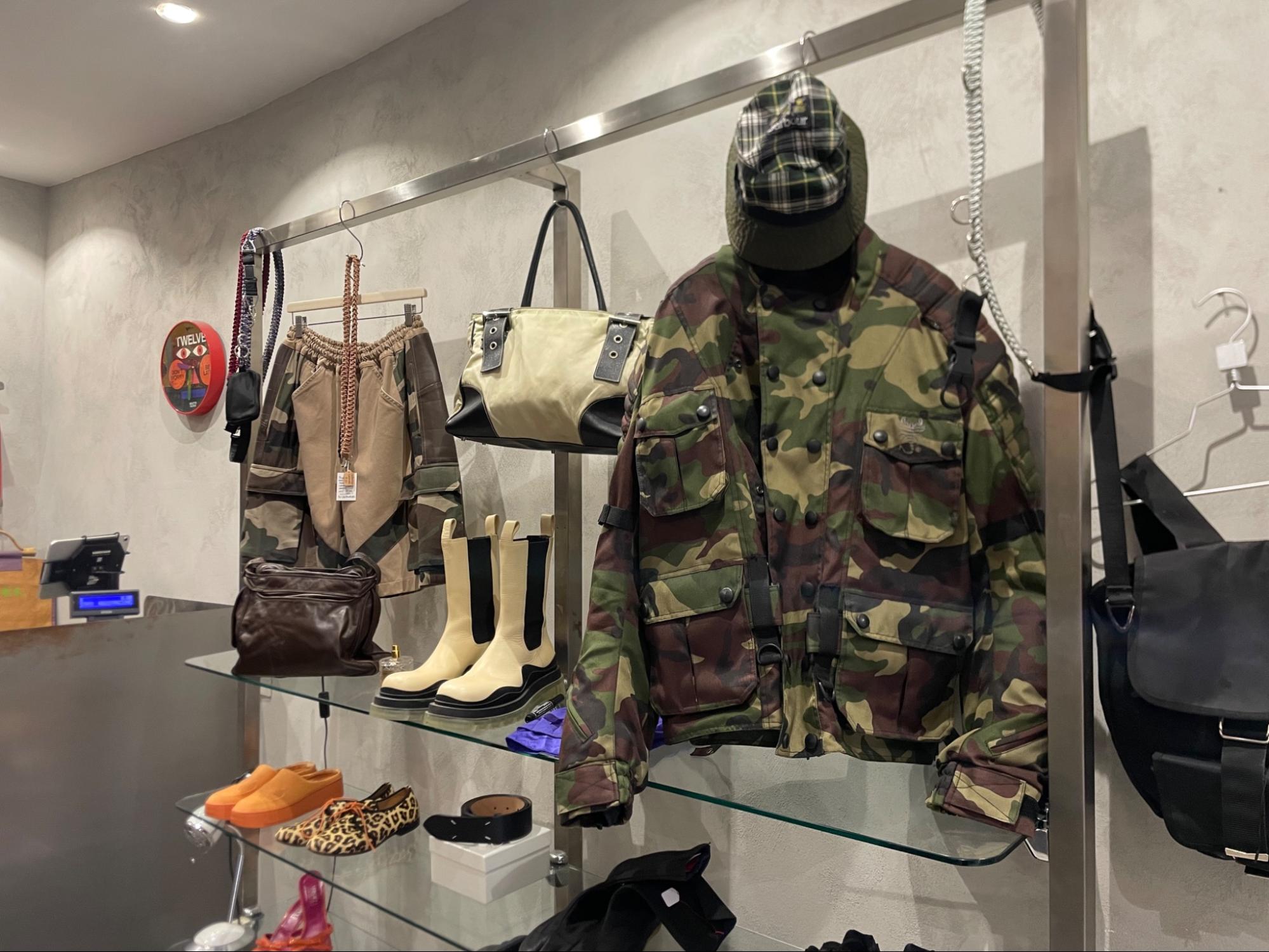
Image: Author’s own (second-hand store in Milan)
Gen-Z’s Y2K fashion revival borrows from militaristic elements, specifically camouflage and cargo. In the early days of the trend, cargo sales went up by 81% between January and May of 2023. For its part, the camouflage market increased from $1.61 billion to $2.15 billion between 2021 and 2026 – a 34% increase. According to the Boston Brand Research and Media, “utility gear, ballistic silhouettes, and camo prints are predicted to dominate upcoming streetwear drops.” Fashion trends are cyclical, and taking part in them entails a certain degree of agency. But in the U.S., and wherever this trend is copied, the choice of dabbling in the military aesthetic is ideologically dubious.
On the one hand, revisiting the Y2K military aesthetic “is part of a broader process of societal militarization that encourages the adoption of unquestioning support for U.S. wars and warmaking generally,” according to political theorist and feminist writer Cynthia Enloe and political anthropologist David Vine. Following the Second World War, the excess of military clothing proliferated throughout the U.S., and in its early manifestation it was rebellious. As fashion historian Charles MacFarlane notes, this clothing “[came] to represent a wide array of countercultures on American campuses and beyond”.
It was then completely absorbed into the mainstream in the 1990s and early 2000s, thanks to the positive rebrand of the U.S. military post-Vietnam War and the widely televised 1991 Gulf War. Fashion executives started marketing camouflage en masse and even coined the shorthand “camo.” And it is within this marketable militaristic context that we see the original blueprint of today’s Y2K renaissance.
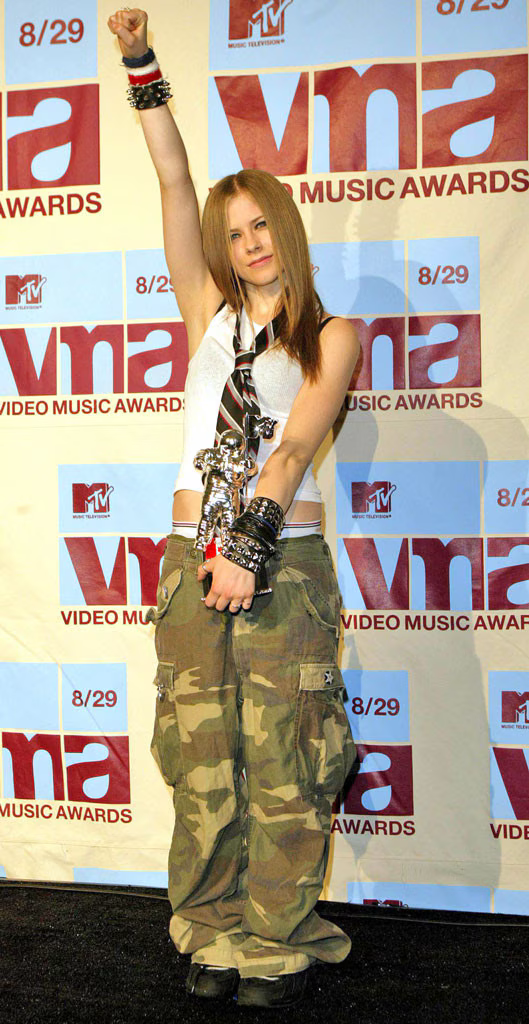
Image: E News
Amidst the spike in global conflicts since the mid-2000s, some argue that Gen-Z’s homage to this aesthetic, is a way to actively assert oneself in the geopolitical state of “with everything that’s going on.” An Oni Cloth article argues that Gen-Z fashion is a direct response to millennial “effortlessness” in fashion, and instead endows clothing with intentionality. The imposing silhouettes of the military aesthetic create a physical presence and a layer between the wearer and an anxiety-inducing environment. However, while some Gen-Zers are equipping themselves in armour, others are trying to subvert this trend. Like their forefathers of the 60s and 70s, this generation “has a reputation for using irony, dark humor, and shock value to process complex global issues.”
Yet, the argument of intentional irony still supports the claim that these fashion choices are ideological and deeply embedded in a militarized society. Playing with war symbols far from the combat zone, but at a time of the proliferation of conflict, limits the ways for one to express themself. As fashion sociologist Dr. Nina Alvarez puts it, “When fashion emerges directly from fear or fantasy about war, it moves from homage to appropriation. The intention becomes murky. Is it protest, preparation, or parody?”
While the wearer thinks they’re in control of the connotation of their outfit, they are still normalizing a militaristic ideology. Enloe and Vine argue that militarized fashion “consciously and unconsciously glorifies war, the military, and military values as hip and cool, presenting a sanitized, bloodless image of the military and warfare.” As pointed out by war historian Dr. Elijah Rowe, “We’re seeing a generation raised in peace recontextualizing war through a lens of fashion without fully grasping its consequences.”
The dissonance between living war and performing war far from a conflict zone feeds into a dystopian and simply out-of-touch reality. In peaceful countries, the wearer has the illusion of control with their choice of imagery and connotation, but they still promote a militarized ideology.
Tech elite dressing you for war
If the gradual militarization of fashion, and the ensuing pro-war ideology, were not forceful enough phenomena, there are also powerful individuals who are actively pushing their own militaristic agenda through fashion.
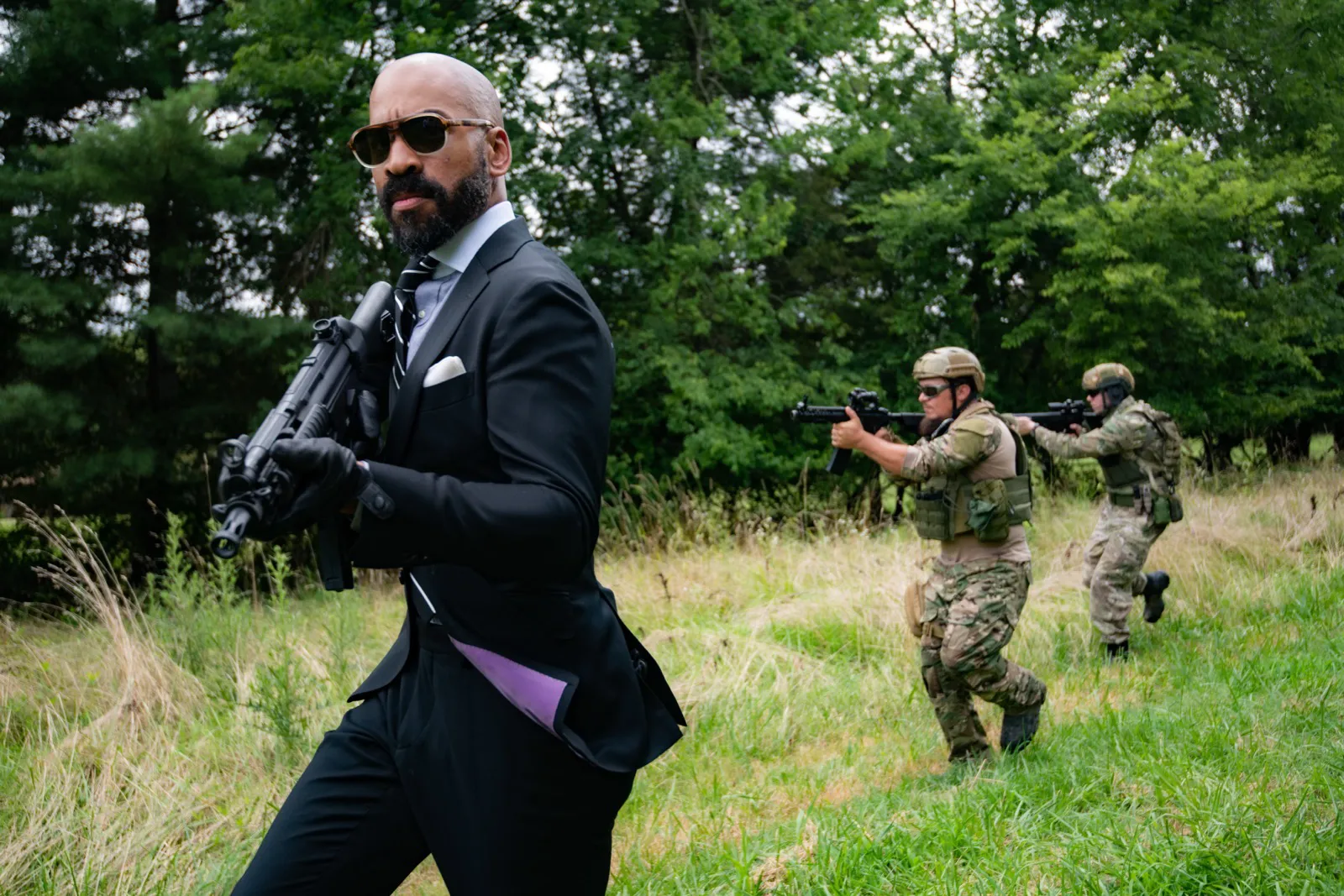
Recently, Vanity Fair’s Margaux Maccoll’s interviewed with Sim Khan, founder of the specialized suit atelier Brimble and Clark, who is doing just that. For a while, Khan’s main audience was defence contractors and special forces, as his suits were made for both fashion and fighting. Khan’s utility suits feature hidden pockets; gouging tools in the collars; magnesium buttons to start fires with; and pockets to hide weapons. Now, these types of suits are also popular among tech executives. “Welcome to the militarization of Silicon Valley style,” Maccoll writes, “In the past year, it seems that founders have traded their Patagonia vests for suits with bulletproof lining.”
Source: Vanity Fair
Does this mean that tech bros, like Gen-Z, are passively following some militarized fashion trend? Or, since this aesthetic is so mainstream, is it their attempt to try to normalize their image, à la Mark Zuckerberg’s 2024 rebrand? It is unfortunately much more sinister. The tech elite’s priority is not to appeal to the masses, but to their favourite client – the American defence industry. Indeed, the tech bosses’ new look is trying to “signal cultural compatibility” with the defence sector. According to Maccoll, tech founders feel like their “aesthetic proximity to the military” is “deserved, given Silicon Valley’s dedication to reindustrializing America.”
All couples start to look alike after a long time together, and tech bros and the defence industry are no different. And after dressing alike, they have now moved to formalize their union. In June 2025, The Wired’s Steven Levy reported on how members of the tech C-suite joined the military ranks. Recently, Meta CTO Andrew Bosworth; OpenAI’s Kevin Weil; Palantir CTO Shyam Sankar; and Thinking Machines Lab advisor Bob McGrew joined Detachment 201, the Executive Innovation Corps of the American military. According to an Army press release, this unit “aims to make the force leaner, smarter, and more lethal.” As in some relationships, tech executives are adopting the habits of their new partner, transforming from nerdy founders, to something more soldierly. As the sirens are blaring about how AI will have the capacity to end humanity within the next 10 years, and AI CEOs are attempting to reel back its deadly pace of development, it is ironic that some of the most influential tech executives are helping the U.S. military use this type of technology for “efficiency and deadly force.”
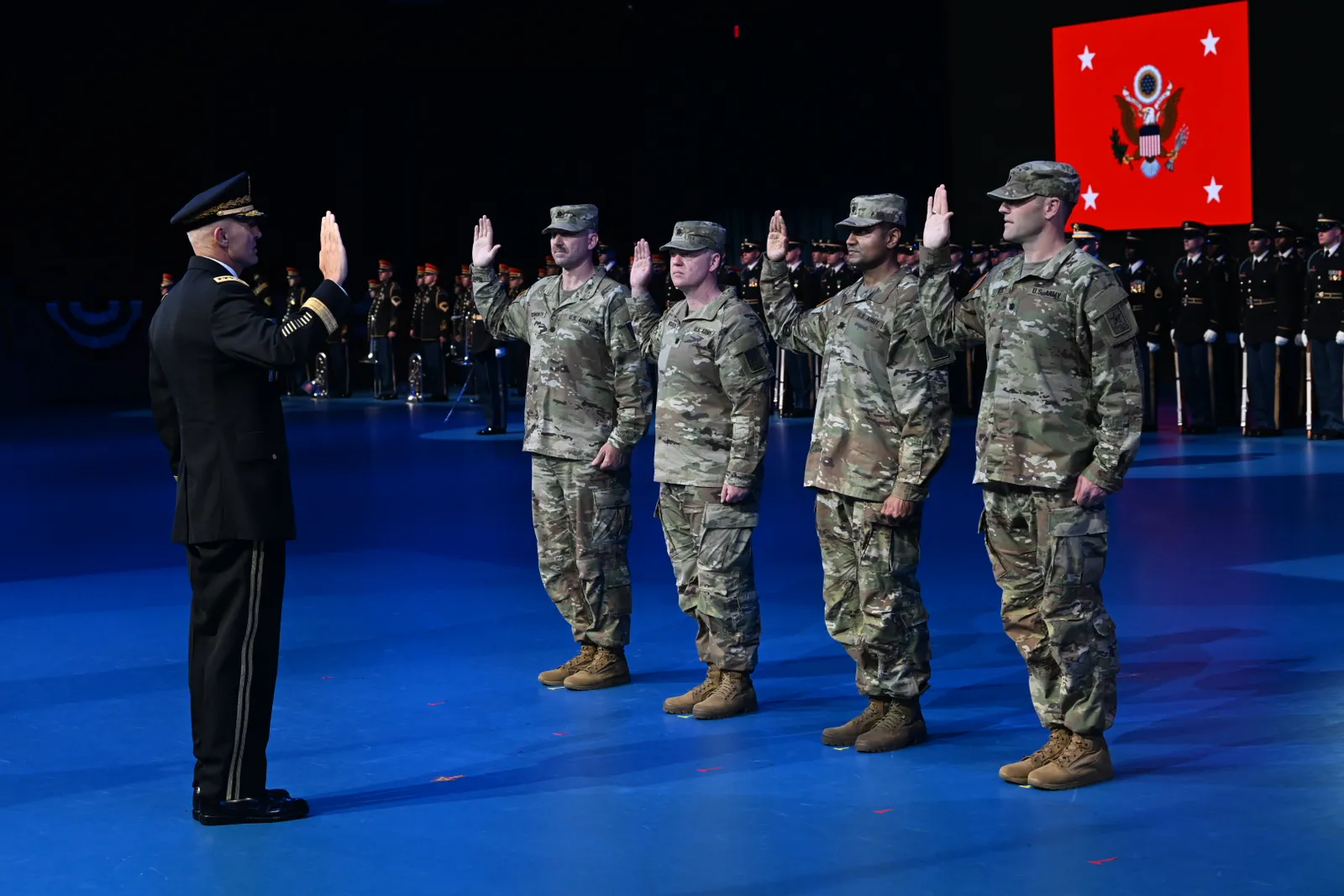
Image: The Wired
As they “reindustrialize America” through the militarization of technology, the Silicon Valley elite want you to be well-aware of it, and maybe even condone it. Back in May 2023, Korean apparel company Doojin Corporation released a military aesthetic collection, which included cargo pants and Lockheed Martin branded tees. Yes, the company bought the rights to the defence giant’s brand to sell their “functional-clothing-as-fashion”.
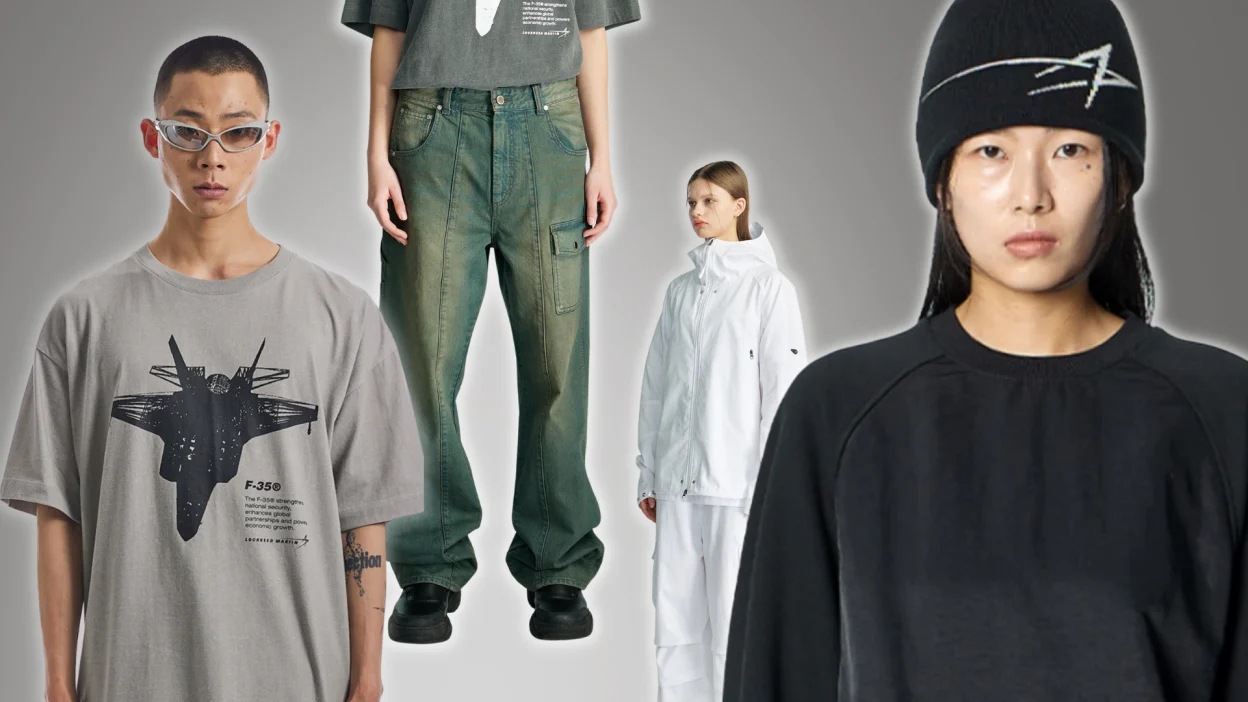
Image: Mashable
At the end of April 2026, Palantir dropped their own collection of the now-trending chore coats, to quite literally signal their commitment to “re-industrializing America.” The chore jacket dates back to post-World War I France, which saw rapid industrialization, an employment boom, and collective bargaining power for workers. Amidst all of this, French unions negotiated for free clothing, including the chore jacket. At first glance, the chore jacket does not completely fit into the military aesthetic, however Palantir’s head of strategic engagement, Eliano Younes, wants the jacket to be “something that was comfortable, stylish and durable for the front lines or for daily life.” So whether you are wearing camo or a fashionable chore coat, the tech elite are just as likely to be dressing for the front lines, embedding themselves in the military, or selling you their vision of re-industrializing America, one defence contract at a time.
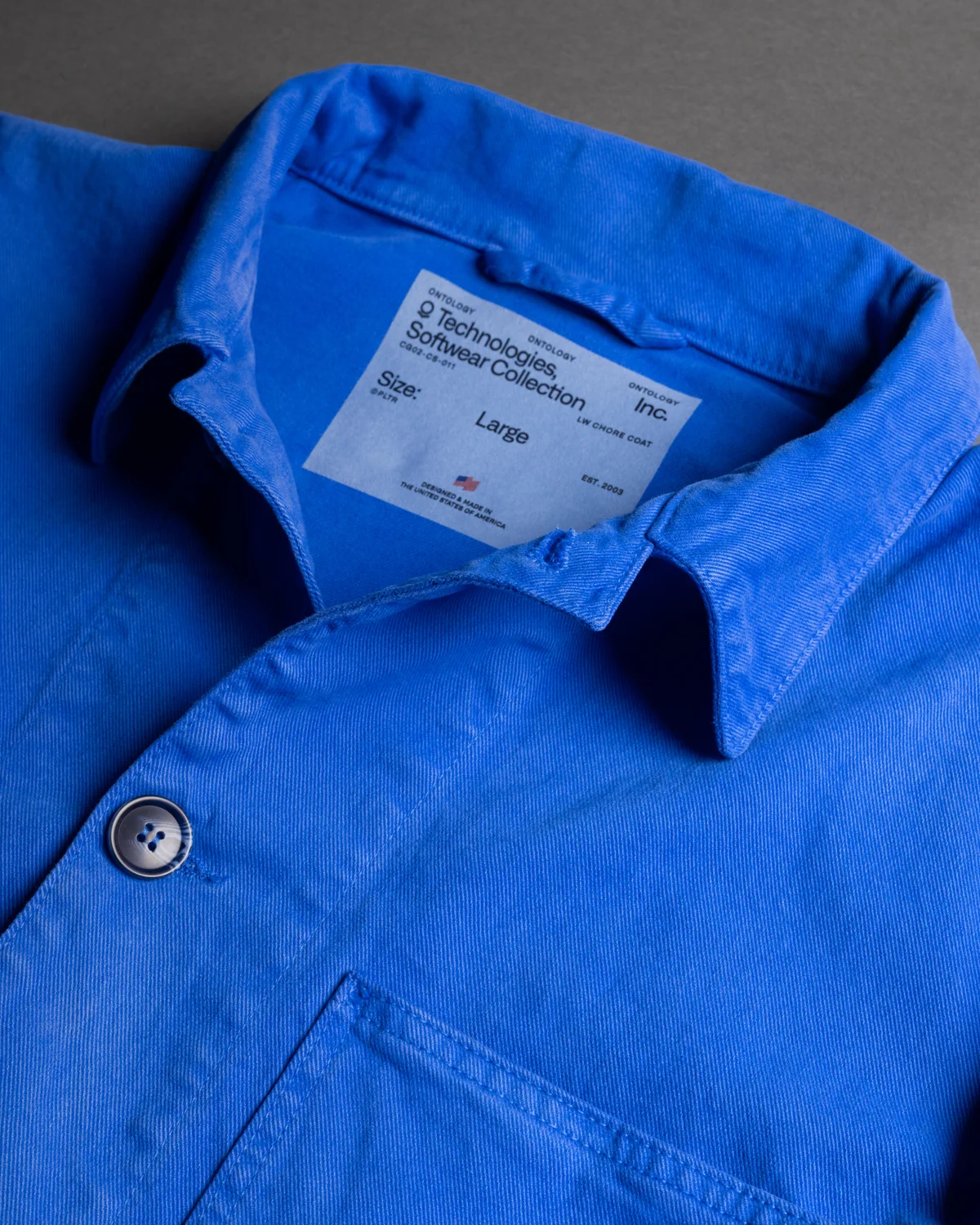
Image: Palantir Store
Conclusion: Should we be wearing this much camo?
In Kyiv, as in similarly trendy European and North American metropolises, cargo and camouflage are fashionable and ubiquitous. But in Ukraine, the look is also a deliberate and codified choice. It pays homage to those resisting an imperial invasion and meets the practical needs of life under constant Russian attacks. Elsewhere, Gen-Z’s Y2K fashion revival draws on decades of militarized fashion and, whether worn unknowingly or ironically, makes war look sanitized and cool. Silicon Valley’s elite have turned that normalization into a deliberate project, designing the clothes and dressing like the defence industry it now serves. The irony is while one iteration of the aesthetic equips its wearers to survive a war, the other quietly equips them to accept one.


