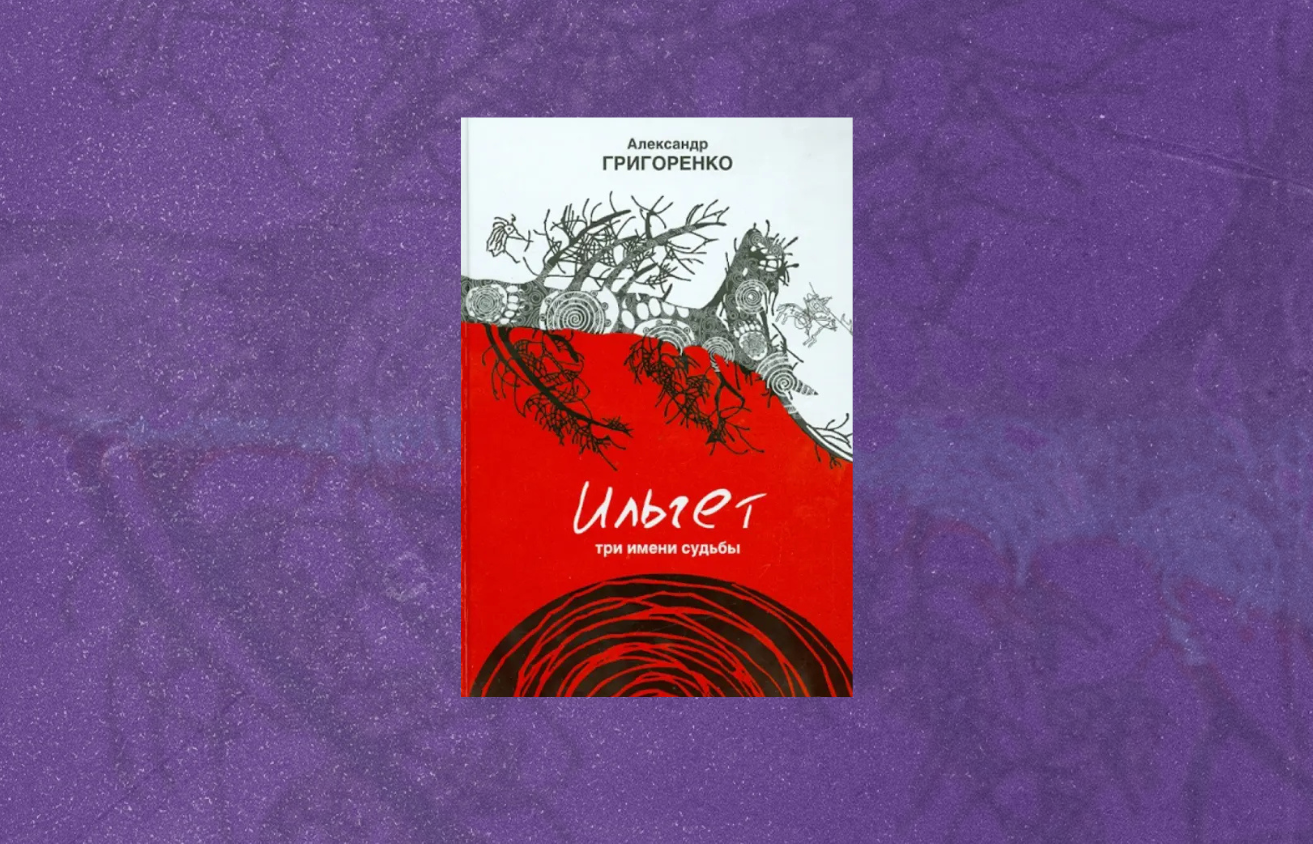


A different Russia: Alexander Grigorenko’s “Ilget: The Three Names of a Life”6 min read
“The Tree of the Yenisei is not a lie.”
There could hardly be a better sentence with which to enter Alexander Grigorenko’s world in Ilget: The Three Names of a Life. The Yenisei is more than the great river around which the novel unfolds: it is a road, a world, a source of memory and a force that binds together humans, animals, spirits and generations. In Grigorenko’s Siberia, landscape is never merely background. It determines how people live, what they fear and, ultimately, how they understand themselves.
First published in Russian in 2013 as Ильгет. Три имени судьбы and translated into English by Christopher Culver in 2024, Ilget: The Three Names of a Life is the second novel in Grigorenko’s loosely connected Siberian trilogy. The author himself has spent most of his life in Siberia and lives near Krasnoyarsk. His fiction draws heavily on the folklore and cultures of Siberia’s Indigenous peoples, creating worlds that feel simultaneously historical, mythical and startlingly timeless.
A life in three names
At its heart, Ilget: The Three Names of a Life is the story of one man attempting to discover who he really is. His life is divided into three identities, each marked by a different name. The novel unfolds almost like three connected lives, with every new name signalling a profound change in his status, surroundings and understanding of himself.
He begins as Dog’s Ear, a weak and unwanted child whose place in the world is uncertain from the very beginning. After the death of his twin brother, he is taken in by another family, but never fully belongs to it. His name reflects his lowly position: he grew up on the margins, treated less as a son than as someone expected to serve and endure. Yet Dog’s Ear possesses unusual abilities and an instinct for survival that gradually set him apart. This first part of the novel is about the protagonist’s childhood, which is marked by vulnerability and dependence as he is trying to understand the rules of a harsh world in which his fate is largely decided by others.
The second stage of his life begins when circumstances carry him away from that existence and he acquires a new name: Ilget – a Ket name meaning roughly “Man of the earth”. With the new name comes a new social position. He is no longer simply the unwanted boy of his childhood. Through a combination of intelligence, chance and almost supernatural fortune, he becomes a figure of authority within another community. This section of the novel is broader and more expansive, allowing Grigorenko to explore leadership, kinship, love, rivalry and the customs of the peoples living along the Yenisei. Ilget appears, for a time, to have escaped the powerlessness of his youth and to have gained some control over his own destiny.
But the apparent stability does not last. The arrival of the Mongols tears apart the world he has come to know. The violence of conquest pushes him into a third existence, and with it comes yet another name – Blind-and-Deaf. Now stripped of much of what defined him, he becomes a captive and wanderer, forced once again to reconstruct his identity under circumstances he did not choose.
Each name represents not merely a different label but a different relationship to the world: first dependence, then authority, then survival. Grigorenko uses these successive identities to ask how much of a human life is shaped by character and how much by forces beyond our control. Ilget repeatedly becomes someone new because history, family, violence and circumstance force him to. Yet across all three identities, something essential remains continuous – his willpower and his desire to go back to his river.
Reading Siberia – and another Russia
Reading Ilget: The Three Names of a Life makes you understand that Russia is not just Moscow, St. Petersburg and Sochi. This is exactly what makes Ilget such a valuable book for readers trying to understand Russia. For many readers outside the country, Russian literature still begins and ends with a familiar canon: Pushkin, Tolstoy, Dostoevsky, Chekhov. These writers remain indispensable, but if you read them alone, it becomes dangerously easy to imagine Russia primarily through Moscow, St Petersburg, the Orthodox Church, the imperial court and an overwhelmingly Slavic cultural world. However, Grigorenko takes us somewhere else entirely. His Siberia is populated by communities whose cosmologies, social structures and relationship with nature bear little resemblance to the Russia traditionally encountered in the nineteenth-century classics. Here, rivers and forests constitute the geography of civilisation. Spirits inhabit the world alongside humans. Identity is organised around kinship, community and landscape rather than around the institutions of a distant state. Russia stretches across northern Eurasia and encompasses a remarkable range of Indigenous peoples, languages, religions and historical experiences. The cultures of Siberia are not just colourful appendices to some supposedly more authentic Russian story centred thousands of kilometres to the west. They are part of that story.
Grigorenko himself has spoken explicitly about his desire to challenge the old distinction between supposedly “historical” and “non-historical” peoples. In discussing Ilget, he argued that the absence of written records does not mean that a people lacked history. His decision to bring the Mongol invasion into the novel was also deliberate: the inhabitants of the taiga are not living outside history simply because conventional histories have rarely made them protagonists. That insight gives Ilget: The Three Names of a Life significance beyond its medieval setting and its focus on the cultures of Siberia. Reading contemporary Russian writers such as Grigorenko broadens our understanding of what “Russian literature” can mean. Russia is not, and has never been, culturally or ethnically homogeneous. Its literature becomes much more interesting once you move beyond the small group of canonical authors through whom the country is most often introduced abroad.
There is another advantage to doing so – contemporary writers can illuminate parts of Russia that the traditional canon scarcely touches. Reading Grigorenko alongside Dostoevsky helps us understand Russia as a whole: European and Asian, Slavic and Indigenous, urban and taiga, Christian but also animist, Muslim, Buddhist and shaped by countless overlapping traditions.
A story worth surrendering to
Ilget: The Three Names of a Life feels like an ancient tale told around a fire and an adventure story at the same time. The book is not merely a journey into Siberia – it is an invitation to reconsider where we imagine Russia’s cultural centre to be. Even when describing a world radically different from that of most contemporary readers, Grigorenko does not turn his protagonists into ethnographic specimens. The novel moves from intimate family drama to myth, adventure, catastrophe and historical epic without losing sight of the human being at its centre. The deeper Ilget travels into the world, the more you would want to know where fate will carry him next.
That is maybe the novel’s greatest achievement – it introduces readers to unfamiliar histories and cultures without ever feeling like a lesson where Siberian customs and peoples are exhibited like artefacts in a museum. The ideas emerge throughout the book because we have become invested in a man searching for his place in an enormous and unpredictable world.
Warm, strange, wise and immensely absorbing, Ilget: The Three Names of a Life is the kind of novel that quietly takes possession of you. Once Grigorenko has put you aboard his boat and pushed you out onto the Yenisei, it becomes almost impossible to climb out before reaching the other shore.