

Chasing belonging: Rootlessness in “Besitikint Rojaus” at the 2026 Samizdat Film Festival4 min read
Gabrielė Plukaitė’s Besitikint Rojaus (2026) revolves around a Berlin nightclub bedecked with rootless Eastern European partygoers. Known as a queer haven, Berlin offers the world – but does it deliver? “Besitikint Rojaus” translates as “Expecting Paradise,” but in reality, the characters’ hopes are slashed as they contemplate life, loneliness and belonging on and around the dance floor. Paradise seems easier to imagine than find.
Berlin promises it all – safety, prosperity, success. But what do those arriving from afar actually experience? Besitikint Rojaus explores what it means to belong, unwrapping the significance of migration as a shared experience. With characters from Kazakhstan, Ukraine, Russia, Georgia, Lithuania, Belarus and more, Plukaité presents migration not as a triumphant journey towards self realisation, but as a challenging experience in which migrants are stuck in between the past and the present, negotiating different aspects of their identity.
Alienated from their conservative communities of origin but not entirely at home in Berlin, the film’s characters find themselves choosing between family and hiding their real selves or freedom and a pervasive sense of loneliness. In their home countries, these queer youths don’t belong, but they have networks, connections and shared language and community rituals. In Berlin, it can also be hard to belong, because freedom does not guarantee fitting in.
The opening scenes depict Karo, the film’s protagonist, standing at the threshold of the club’s entrance. Standing in the drab yellowing glare of the corridor and dressed for a cold night, the tension between the outside world and what lies within is palpable. As Karo steps inside, twinkling background music gives way to a grungy atmosphere where all is not as it seems.
For Karo and their peers, the club becomes a paradoxical space. A third space that offers an escape from the social conservatism of their home countries, it cannot resolve the lingering questions of identity and belonging that accompany them. Becoming both a refuge and a trap, the dance floor offers freedom – but is it performed, or lived? The alcohol and other substances consumed enter into a heady race with strobe lighting and pounding music to mask the anxieties felt by the film’s characters until they resurface in quieter moments.
Karo is a character of contradictions, but Plukaité uses this to add emotional weight to the film. Their self-destructive nature is frustrating at times, reflecting the uncertainty of someone seeking to connect while simultaneously pushing others away. As Karo spins a web of darkness throughout the night, we follow their pursuit of freedom. But what does it really mean to be free? Does freedom equal happiness?
A telling interaction between Karo and a Georgian friend ensues:
“Isn’t everybody fucking miserable?” / “Are you cinema? ‘Cause you’re massively projecting.”
Plukaité portrays a turbulent dynamic between “self” and “other”. Migration underlies a sense of alienation, with the characters navigating displacement as their past identities collide with a new environment. The club offers a collective “other” as sanctuary, with shared marginalisation bringing people together within the queer community – despite some intra-group barriers. These are demonstrated in an interaction between a Russian and Ukrainian at the bar, with contextual politics proving too hard to overcome despite shared experiences of hardship.
A search for freedom and sense of self is evident in the characters’ break from their respective pasts, but this incurs emotional turmoil, a stalwart feature of any coming of age film. Karo trips up in conversations with friends, struggling to say the right thing, caught between underhand signals, political affiliations and tendrils of connection. Plutaiké leaves the film’s characters in a grey, draining area.
Karo’s friend Agné hands out some sage advice:
“You need to get your head out of your own ass. I mean, it’s your choice, to pretend you’re some kind of fucked up, lonesome wolf.”
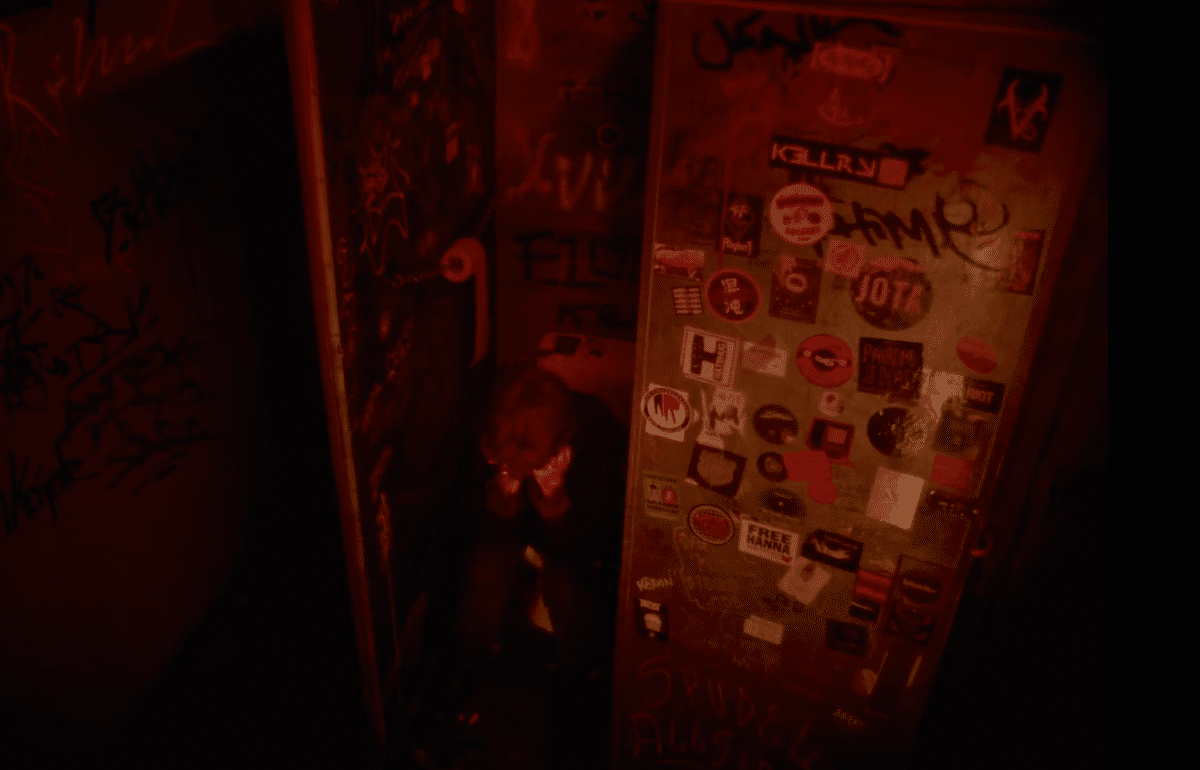
Karo struggles to communicate and leaves behind a trail of arguments. It becomes too much, and they seek solace in the relative privacy of the bathroom. They experience a panic attack sitting on the toilet, highlighting their loneliness and isolation and challenging stereotypes about queer club nights being joyful and free places. As the familiar sound of the club transforms into a threatening and claustrophobic drumming, with sharp metallic noises closing in around Karo, their emotional distress is conveyed with clarity.
Besitikint Rojaus offers a profound exploration of what it means to belong when you leave everything behind in search of an idealised freedom. Nothing is as easy as it may first appear, and Plukaité effectively captures the loneliness of searching for belonging in a city that promises everything and guarantees nothing. The film captures a portrait of a generation suspended between home and abroad, stuck between expectation and reality.
Besitikint Rojaus (2026) was screened as part of the 2026 Samizdat Eastern European Film Festival.