

My grandmother’s earrings: Who gets to define what it means to be Kazakh?6 min read
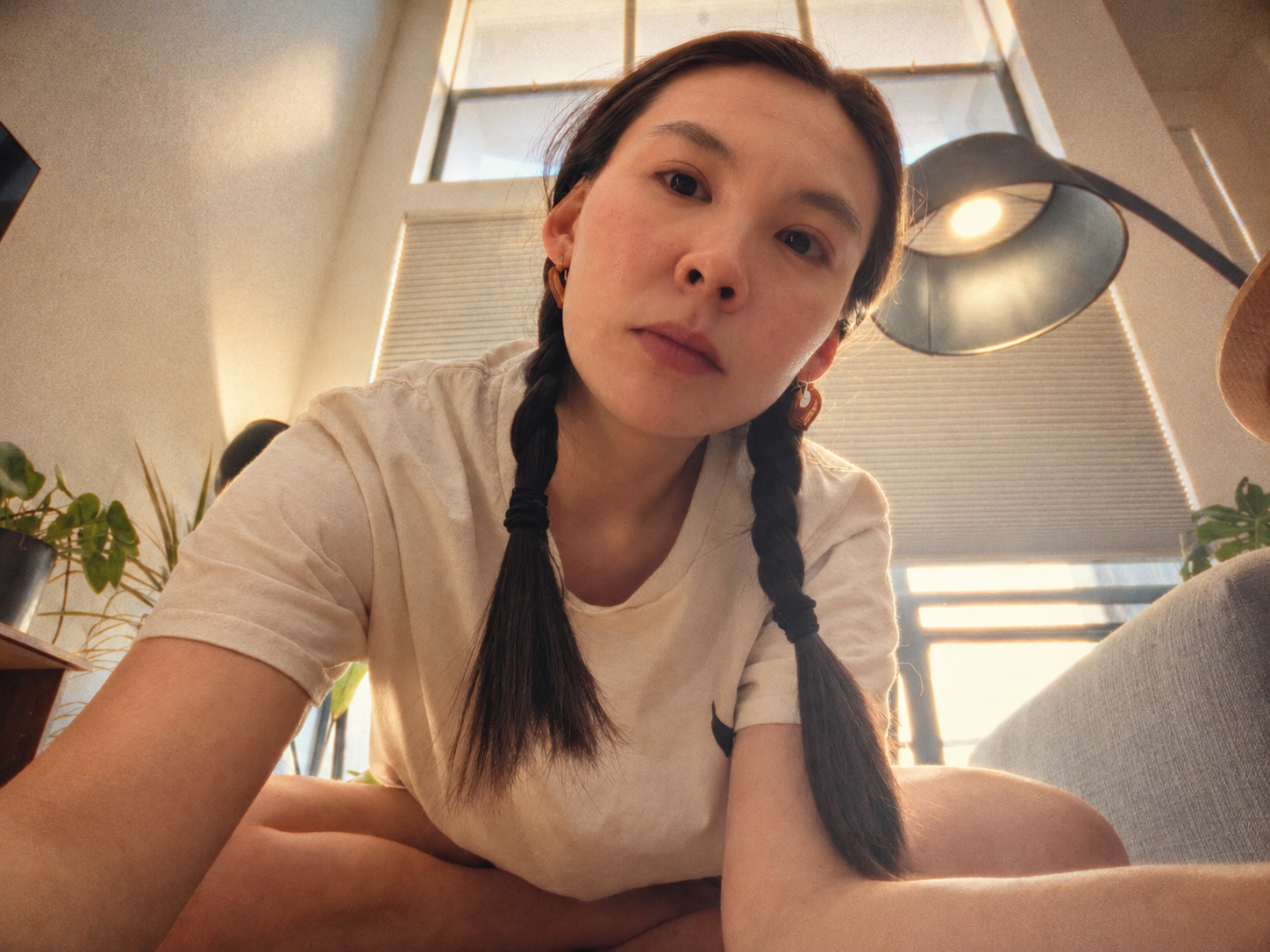
I started wearing earrings again in my thirties, decades after my ears were pierced when I was about five. I found myself wondering why it had needed to happen so young. At first, I felt resentful towards my mother and grandmother. Then I remembered their explanation: earrings protected girls from the evil eye and other people’s envy. They were trying to protect me through a tradition that also gave them authority over my body.
As a woman in STEM in my thirties,I have little reason to believe earrings can protect me from the evil eye. But I cannot separate it from the women who raised me. Much of my relationship with Kazakh identity involves this tension: wanting to keep what matters to me while questioning what I was taught to accept.
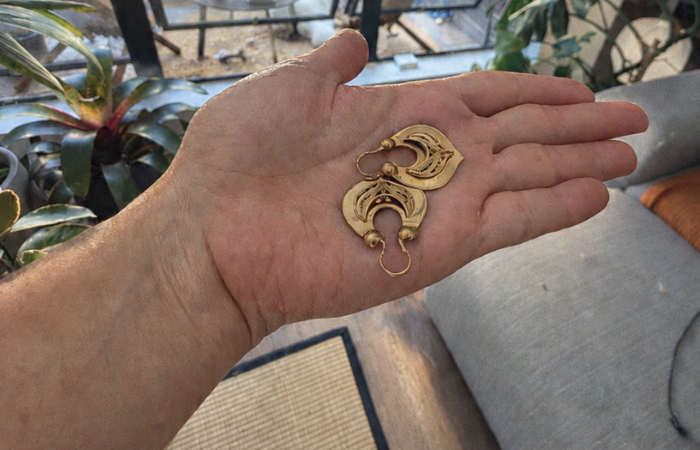
Image credit: Aisulu Omar
The stories we inherit
Ancestry carries its own expectations. Kazakh society is traditionally organised around three broad groupings, or zhuz: Uly, Orta and Kishi. Through my father, I am Kypchak, part of the Middle zhuz. My mother’s family is Kozha, associated with hereditary sacred lineages and religious authority. As a child, I felt drawn to her ancestry because it seemed special. But our patriarchal system privileged my father’s lineage. My mother could pass on her customs and beliefs; his ancestry determined how I was identified.
These identities also carried rules about marriage and status. We were told not to marry within our lineage, a restriction connected to “zheti ata”: tracing seven paternal generations and avoiding marriage within that circle. Kypchaks were stereotyped as fighters. Kozha ancestry carried religious prestige, and my mother regarded our family’s supposed Arab ancestry as something special.
The contrast amused me when a DNA test estimated my ancestry as 49 per cent Mongolian and 40 per cent Central Asian, without identifying an Arab component. Those estimates cannot settle a distant family connection. Still, my mind went straight to Genghis Khan. The Mongol conquests helped shape the Kazakh steppe, but a DNA percentage cannot establish my descent from one ruler. Why was I drawn to the possibility of a celebrated strategist in my family tree? What about the women who may have experienced conquest as sexual violence? The test cannot reveal that history either. But I can question why ancestry seems more prestigious when attached to powerful men.
 Image credit: Aisulu Omar
Who gets to define “us”?
Religion raises similar questions about who gets to define us. Living in the US, I return to Kazakhstan every year. On each visit, I notice more men gathering for Friday prayers and more women wearing headscarves. In the US, I feel solidarity with Muslims facing Islamophobia. In Kazakhstan, I have sometimes encountered people who treat religious observance as proof of moral superiority. I resent that certainty when it becomes a demand that everyone else follow their rules.
In 2022, actor and director Nurtas Adambai urged President Qasym-Zhomart Toqaev to ban Pixar’s Lightyear because it showed two women kissing. He called on the state to restrict “values not shared by us.” Kazakhstan subsequently barred the film from screening.
I was furious. Who was his “us”? Queer Kazakhs belong to this country too, yet he spoke as though their exclusion were something we had all agreed on. His personal beliefs became a claim about our collective identity, backed by a demand that the state enforce it.
That certainty about what belongs in our culture makes me think about the stories we have inherited. In the Kazakh folktale “Dudar Qyz,” the heroine demands authority over her own life before she is even born. She later presents herself as a male hunter, wins an archery contest, and marries a khan’s daughter. Eventually, both women marry the male hero, Tostik.
The story does not prove that our ancestors accepted queer relationships. But it does imagine a woman becoming another woman’s husband. That makes me question how confidently people declare such possibilities foreign to our culture. And queer Kazakhs should not have to find an ancestor or a fairy tale to justify their belonging in the first place.
The consequences of that exclusion now reach beyond one film. In December 2025, Toqaev signed legislation banning the dissemination of so-called “LGBT propaganda”, including through media and online platforms. To me, this tells queer people that their lives are unfit to be seen. For those already facing rejection from family or community, state censorship risks deepening shame and isolation while making support harder to find. Some have the resources to leave. Others must live with these pressures in the place they call home.
What survives
The same struggle over who gets to define an ‘authentic’ Kazakh identity appears in debates over religion. I also hear that Islam was never ours, that it represents another form of colonisation. That argument ignores its long presence before Soviet rule, including Sufi traditions. Khoja Ahmed Yasawi was a twelfth-century Sufi teacher, and his medieval mausoleum in Turkistan remains a reminder of that history. Contemporary Saudi practice cannot be the sole measure of our ancestors’ faith.
Nor should history dictate what women wear. Kazakh women wore head coverings such as the kimeshek, which marked marriage, motherhood and status. Those meanings should not be reduced to evidence of a religious obligation. I like to imagine our ancestors as fierce steppe women who took orders from no man. That part is my imagination. I do not need a past free of patriarchy to insist that women today choose for themselves.
My grandmother’s practices make this history personal. She burned adyraspan to cleanse the house and protect us from evil spirits. I remember her using small dried pieces to predict the future, although I cannot be certain it was qumalaq ashu, the Kazakh practice of reading fortunes in dried pellets. Calling these rituals superstition tells me little about what they meant to her.
Soviet colonial rule disrupted how religious and cultural knowledge passed between generations. I feel those gaps when I try to understand my grandmother’s rituals: where she learned them, what they meant to her, and how she understood their relationship to Islam. Practices I accepted without question as a child now leave me with questions I can no longer ask her.
Sometimes I imagine Kazakhstan without colonisation and wonder what pain our families might have been spared. Yet Soviet life also shaped my family’s education, ambitions and tastes. For years, I tried to reject that inheritance: the Russian books, music and media I grew up with, and ways of thinking that still felt familiar. I struggled with my attachment to a culture so closely tied to the losses I was trying to understand. I am learning to acknowledge that affection without letting it soften my anger at what was taken from us.

Image credit: Aisulu Omar
The earrings I wear now belonged to my grandmother. I inherited them after she died. When I wear them, I feel as though I carry a little of her protection, and that of the ancestors before her, into the world. Whether it is the evil eye, bad energy, or simply my own fear, I feel less alone facing whatever is out there. This time, wearing them is my choice.