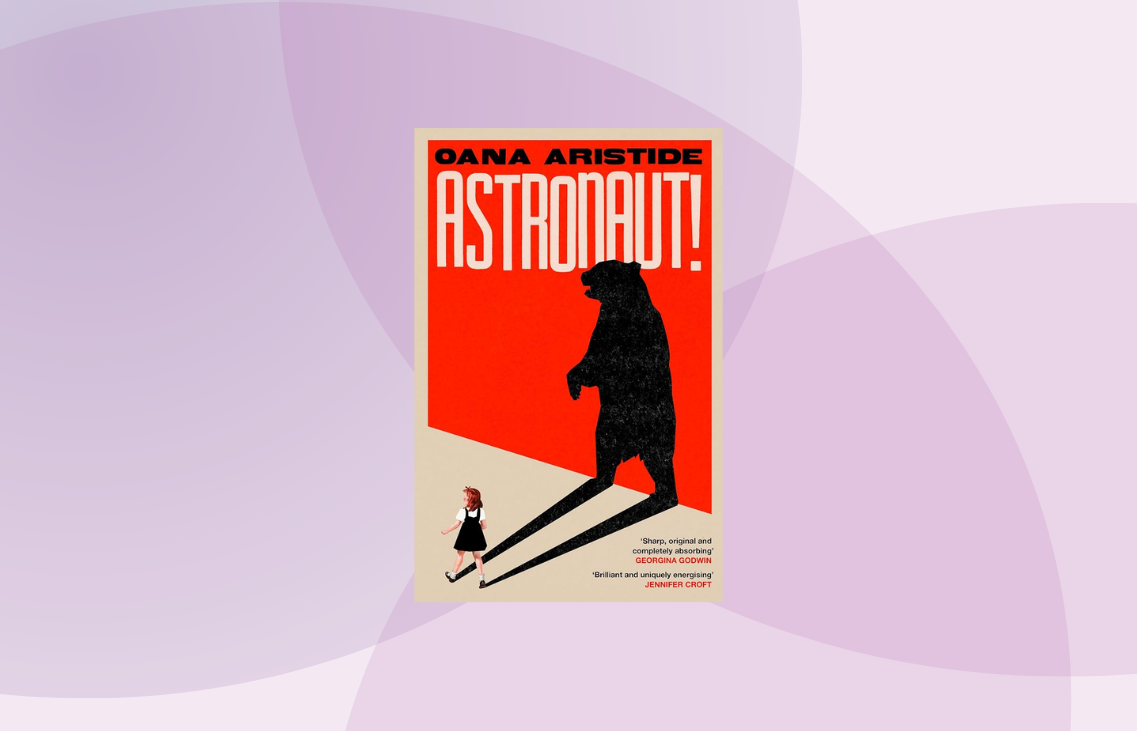


“Astronaut!” by Oana Aristide – a darkly funny novel about life in Romania during the final year of Ceaușescu’s rule5 min read
Presumably murderous bears, a rebellious little girl that fears the colours slowly disappearing from life and wants to speak to the “Dear Leader” Comrade Ceausescu about it, her grumpy old neighbour who is deemed a bad influence with his outspoken anti-regime opinions, an idealistic police officer tasked to solve a series of grisly murders – this is the diverse cast of characters in Aristide’s newest book that offers a satirical view on life and its struggles in communist Romania. A life characterised by fear and mistrust, self-censorship, corruption, informers, queues and a general lack of bright colours.
There are many ways to write books and tell stories about life under communism and I have read quite a few of them, but I have certainly not read many with such an original plotline as Astronaut! (2026). The book focuses on two main characters and their, in the beginning, separate plot lines, that are told in alternating chapters. There is the eight-year old Lia, who loves drawing and colours. The author makes great use of the child’s perspective and the concomitant naiveté about the unspoken rules the adults follow to survive unscathed in the repressive state they live in. There are many remarks and restrictions from her parents and her teacher that Lia can’t make any sense of and that will bring a smile to the reader’s face. For example, her parents’ concern when she says that she wants to depict “Romania, the communist Paradise” as a big colourful circus in an official drawing contest from school, or why she and her parents got in so much trouble just because she wanted to surprise her mother with a beautiful vase and stole the colourful and unusual banknotes that her parents had hidden in the living room to pay for it. And when she befriends her elderly, grumpy neighbour, Comrade Mantea, she gets drawn into a plan that seems to promise her the chance to finally talk to the Leader about the missing colours. And then there is the idealistic and good-natured police officer Constantin, who is tasked with solving a string of murders all over the country, which somehow, because of fear from politics and bureaucracy, have been sold to the public as the doings of a murderous bear. Then what else should you tell the public when the official credo is that a communist country doesn’t have serial killers, that this is something that only exists in the capitalist West? As Constantin’s boss argues, when warning the population to be cautious, the only consequences would be “panic, distrust of the police, and the politically unacceptable premise that we’ve produced one of those capitalist serial killers.” And when the connection linking all the seemingly random victims becomes clear, the case becomes even more delicate to handle for Constantin and his people.
The creative element of the bear seems not just to haunt Constantin but it also shows the reader everything that was wrong in Romanian society under communism. The bear seems to represent the lies and misinformation spread by the authorities, by politicians, on TV and in the media. Lies that, it seems, are easier to just believe in than to question and thus risk being prosecuted because of anti-communist or anti-regime talk. Lies that can start to seem like the truth if they are just repeated often enough. This also vividly demonstrates how people felt safer if they abstained from too much critical thinking and rather just tried to conform in the public sphere because they had to always be cautious about possible informants of the Securitate. Another element that is used metaphorically to better explain the problems of communist Romania and its society, are the fairy tales that Constantin made up to tell his young son. Tales about conformity, devils that want to incite neighbours against each other, or about the virtues of trust and truthfulness.
Although the book is rather satirical and ironic in tone – somewhat like the ironic tone of Dan Lungu’s I’m an old Commie! that deals with communist nostalgia in Romania and as compared to, for example, Catalin Dorian Florescu’s newest book Matei entdeckt die Freiheit (no translation available yet) that also deals with life and repression under Romanian communism but offers a sombre and chilling tone – the harsh reality of life under Romanian communism as narrated in Aristide’s novel should not be underestimated. The strong presence of Ceausescu’s persona in the book mirrors the reality of his rule with the distinctive personality cult that characterized Romanian communism and his enormous influence on the state of the country and its population. Romania under Ceausescu was, after Albania, known as the most repressive communist system of that time in Europe. With the Securitate controlling virtually every sphere of its citizens’ lives; a vast network of informers; a severe lack of food items, petrol, electricity and consumer goods due to the State’s policies of wanting to repay all foreign debt; and insane and intrusive laws about the lack of contraception available for purchase while outlawing abortions and implementing regular mandatory gynaecological examinations of the female workforce at the workplace, all just in order to increase the population and thus the workforce of the future.
I very much enjoyed the book, especially because of the unique and innovative plot and the two main characters, who come from markedly different demographic backgrounds, where they stand in their respective lives and how they perceive the political system they live in. Lia’s character and her childish naiveté in particular offered a unique way of exposing the political system and its rules, which the adults comply with or even collaborate with. Even though the general tone is rather on the lighter side, even making the reader smile at times, despite addressing serious topics, and the overall language used is rather unpretentious and straightforward, the book was a real highlight in my reading year so far and I’m glad I randomly picked it up in a Bucharest book shop. I can recommend Astronaut! to everyone who wants to learn more about life under Romanian communism in a more playful and gripping way or generally to people who are looking for a unique and original plotline with heart-warming characters, satire but also tension.